
Origins of Life · Dancing with "Bacteria"
Unlock the secrets of life, shape a healthier future together
On the afternoon of 7 30, Taihe Hall on the 9 floor of Chang'an Club was packed with attendees. Hosted jointly by Chang'an Club and the Chang'an Youth Chamber of Commerce, the health-themed lecture "Origins of Life: Dancing with 'Microbes'" warmly commenced. Dr. Huang Shan, Director of the Institute of Bioengineering at Peking Union Medical College Hospital and Senior Researcher at Canada's Non-Drug Research Center, was invited to unlock the frontiers of life sciences for members and guests, exploring scientific approaches to safeguarding health together.
A conversation across 40 billion years of life
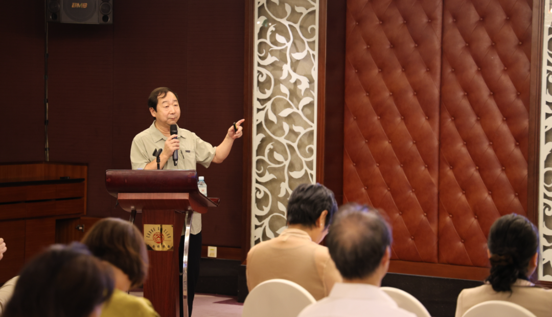
"Which came first, the chicken or the egg?" Director Huang opened with this classic philosophical question, instantly connecting with the audience. From a scientific perspective, "the chicken is a living organism, and the egg contains genetic material." The origin and evolution of life begin with the synergy between genetic material and energy metabolism—this reveals the core message of today's lecture: understanding the essence of health through the fundamental logic of life's origins.
Director Huang leads the group back 38 billion years to stromatolite fossils, the remnants of Earth's oldest life forms (archaea). These ancient organisms still "breathe" on the seafloor at Shark Bay, Australia, quietly producing oxygen. The true leap in life came from a pivotal event called endosymbiosis: the ancestor of eukaryotic cells engulfed bacteria capable of using oxygen, eventually evolving mitochondria—the cell's "powerhouse."
"The health of mitochondria directly determines the efficiency of human energy metabolism," emphasized Dr. Huang. From producing 32 to 36 ATP molecules efficiently to its role in free radical theories related to aging, mitochondrial research has become a leading frontier in life sciences. The discovery of selenium adds further excitement: as the 21 genetically encoded amino acid (selenocysteine), it is a "master of electron transfer," providing critical support for mitochondrial energy production and antioxidant defense, serving as an "invisible driver" of higher life evolution.
The "Second Brain" in Your Gut: The Deep Bond Between Microbiota and Health
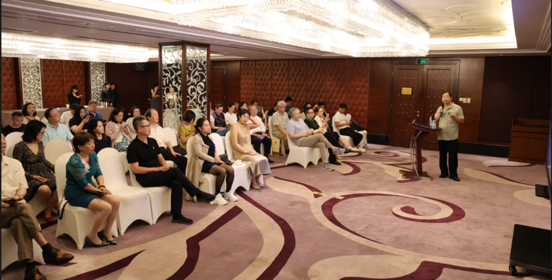
"The human body is a sophisticated ecosystem, and the gut microbiome represents its most complex 'inhabitants.' Director Huang presented striking data: the total gene count of the human gut microbiome reaches 300 trillion base pairs—far exceeding the human genome itself. It is often called the 'third genome.'"
From the transfer of gut microbiota from mother to child during birth and breastfeeding, to the shaping of microbiota by postnatal environments, gut flora not only affects digestion and absorption but also influences neurological function through the "gut-brain axis." Dr. Huang explained: "The role of probiotics goes beyond 'supplementation'; it relies on 'ecological niche occupation'—just as transplanting an entire 'meadow' is more effective than planting a few individual 'grasses'."
He also highlighted cutting-edge advances in microbiota transplantation, from early fecal capsules to today's third-generation purified technologies. Microbiota transplantation has become a key method for regulating gut ecology, particularly in restoring microbial balance after antibiotic use. For everyday consumers, the secret to choosing probiotic products lies in selecting those with diverse strains, containing postbiotics (microbial metabolites), and manufactured by reputable companies—avoiding being swayed by high-priced marketing.
Interactive Q&A: Bring Science Home
The post-lecture Q&A session was lively, with attendees eagerly raising practical questions on topics such as "immune cell storage," "selenium supplementation," and "probiotic dependency." Director Huang patiently addressed each one:
- Immune Cell StorageStore your young immune cells now for future use in cancer treatment and boosting immunity. We recommend choosing an institution with state-owned backing for added peace of mind.
- Selenium SupplementationPrefer selenomethylselenocysteine for its low toxicity and high safety, avoiding potential risks associated with inorganic selenium (e.g., sodium selenite).
- Probiotics and HealthStandard quadruple live bacterial preparations can be taken long-term without risk of dependence. They naturally metabolize with the gut ecosystem—key is "diverse supplementation."
Health Together: Changan and You, Building the Future
The two-and-a-half-hour lecture concluded to a round of applause. From the grand narrative of life's origins to the microscopic world of gut microbiota, Director Huang bridged cutting-edge science with accessible language, making terms like "mitochondria," "gut-brain axis," and "postbiotics" tangible and relatable.
As a key part of the Chang'an Club's "Health Series," this lecture not only provided members with science-based health guidance but also demonstrated our deep commitment to enhancing their quality of life alongside the Young Entrepreneurs Association. Moving forward, Chang'an Young Entrepreneurs will continue launching themed events, empowering members to enrich their lives through exploration and grow together through shared experiences.
See you next time—keep unlocking the secrets to a better life!
(Scientific insights shared by Director Huang Shan for health reference only.)
Explore more events