
AI Changing the World: Innovation & Technology Forum
Conversational AI 2.0 and the Core Power of the Intelligence Economy
As the computing-driven economy becomes the core engine of new quality productive forces, a global gathering of top-tier intellectual exchange concluded successfully at the Chang'an Club on 9 13.
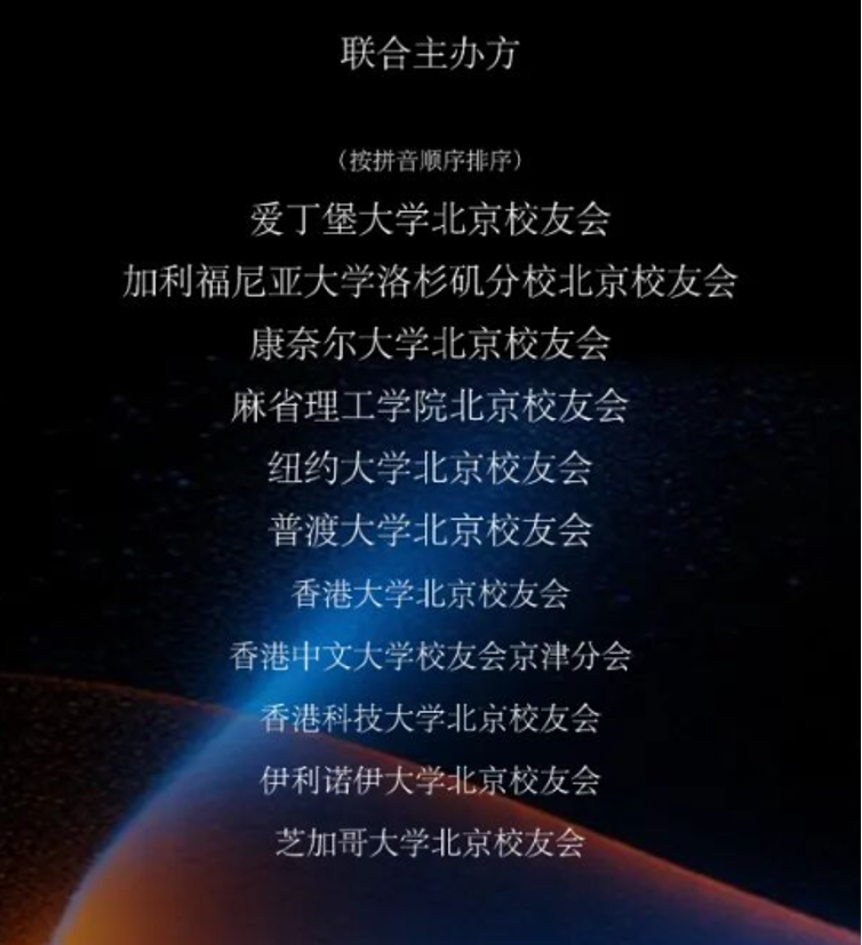
This "AI Changing the World · Science & Technology Innovation Forum" is led by Chang'an Club, Chang'an Association, and the Johns Hopkins University Beijing Alumni Association, with joint hosting by alumni associations from 20+ world-renowned universities including MIT, UCLA, and the University of Hong Kong. Focusing on "Latest AI Developments and Intelligent Computing Economy," the forum brings together AI experts, seasoned investors, and industry entrepreneurs to explore breakthroughs in AI technology, pathways for universal access to computing power, and the emerging global landscape of industrial competition.
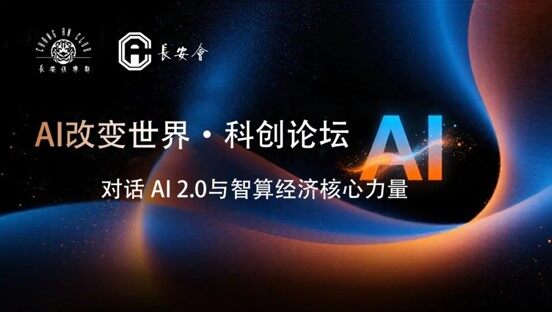
Event Overview: Industry Leaders Unite to Discuss the AI Era
This forum, centered on "Dialogue: AI 2.0 and the Core Force of Intelligent Computing Economy," delivered cutting-edge technical insights and industry analysis while building a cross-sector platform connecting academia, industry, and capital. From AI infrastructure development to accessible computing deployment, from global computing competition to local enterprise opportunities, our guests shared practical experience and forward-looking perspectives, offering the audience a thought-provoking, substance-rich, and engaging intellectual experience.
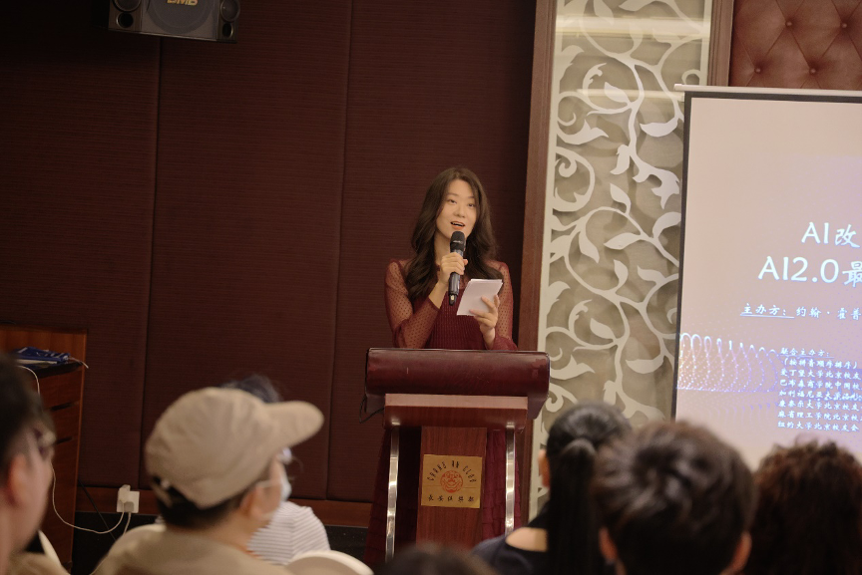
Core Insights: Two Expert Perspectives on Decoding AI and the Intelligence Computing Economy
Perspective 1: Fang Lei, Chairman and CEO of DataCanvas — Inclusive Computing Power: The "New Electricity" for the AI Era
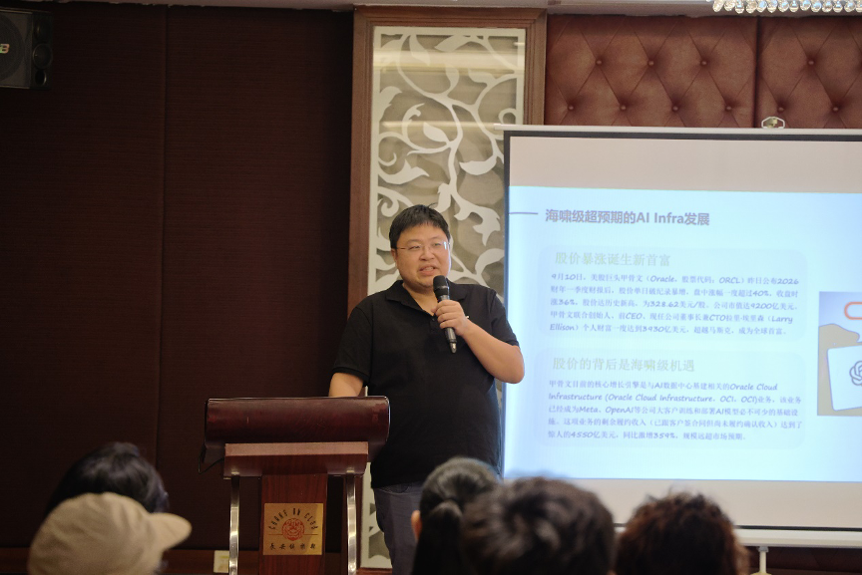
As a leading supplier of AI computing infrastructure in China, Dr. Fang Lei broke down the core logic of building AI infrastructure—covering industry trends, global deployment, and real-world case studies—under the theme "Democratizing AI and Computing Power."
1. Industry Signal: AI Deployment Enters "Compute Power Surge"
Dr. Fang Lei opened by highlighting recent moves from global tech giants: Oracle's AI cloud orders hit $4450 billion, driving its stock price up 36% in a single day; Broadcom launched AI-specific accelerators and deepened collaborations with AWS and other providers; OpenAI achieved "1/5 of the workforce needed for equivalent tasks" through AI-generated code. These signals point to one conclusion: AI adoption has moved from the "concept phase" into the "compute-driven era," with exponential growth in compute demand across the full stack—from chips to cloud infrastructure.
2. Global Computing Power Layout: Differences and Opportunities Between China's "Eight Hubs" and Overseas "Stargates"
Chinese Heritage:Centered on the eight "East Data, West Computing" hubs (covering Inner Mongolia, Guizhou, Yangtze River Delta, and other regions), the landscape is shifting from general-purpose computing to AI-driven computing as CPU-centric workloads transition to GPU-dominated ones. In response, many regions are adopting a localized "East Data, East Computing" strategy tailored to local conditions. Local governments are actively recruiting compute-intensive enterprises through targeted initiatives, positioning computing power as a critical strategic asset.
Global Trends:Representative of the overseas trend toward "single-site, ultra-large data centers" (potentially scaling to millions of GPUs) is the "Stargate" initiative launched by OpenAI and Oracle. Meanwhile, Saudi Arabia has established a national AI company, Humain, with plans to invest $ 1500 billion to build an AI computing ecosystem and acquire 10,000 NVIDIA GPUs to create an "AI Computing Factory."
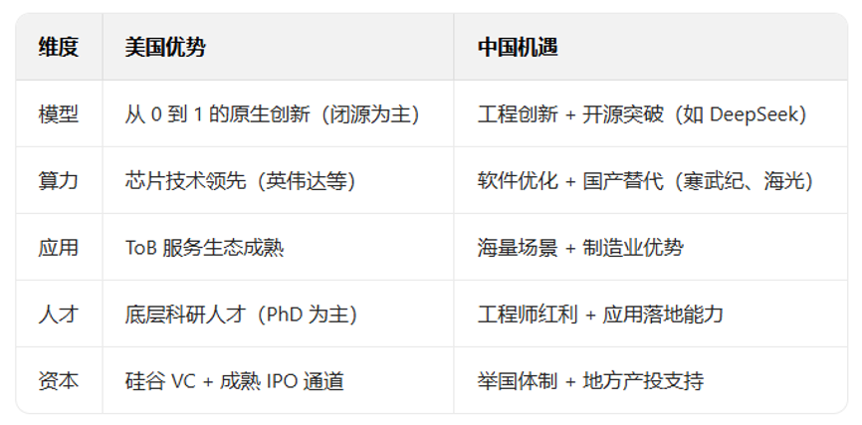
| Dimension | US Advantages | Opportunities in China |
|---|---|---|
| Model | Native innovation from 0 to 1 (mostly closed-source) | Engineering Innovation + Open-Source Breakthroughs (e.g., DeepSeek) |
| Computing Power | Leading chip technology (e.g., NVIDIA) | Software Optimization + Domestic Substitution (Cambricon, Hygon) |
| App | Mature ToB service ecosystem | Massive Scenarios + Manufacturing Advantage |
| Talent | Bottom-level research talent (primarily PhDs) | Engineer Dividend + Applied Implementation Capability |
| Capital | Silicon Valley VC + Established IPO Path | National system + local industrial investment support |
3. Jiusang Practice: "One-Click Compute" Solves Industry Pain Points, Making AI Compute Accessible to All
To address the current computing market's issues of outdated supply and high entry barriers for SMEs, DeepGlint introduces its innovative "One-Degree Computing" solution. It defines "1 degree of computing = 312 trillion floating-point operations × 1 hours," transforming computing power into standardized resources like water and electricity to enable "pay-as-you-go" and "metered-by-the-degree" billing.
Real-world case studies speak volumes: A top-tier university lab adopted a "pay-as-you-go" model, extending 1 months of compute budget to last 4 months while boosting GPU utilization from 11.9% to peak efficiency. Meanwhile, a spatial intelligence company leveraged elastic compute services to purchase 2 months of capacity for the cost of 1 months, slashing expenses by 50%.
Dr. Fang Lei emphasized: "Inclusive computing power isn't about low prices; it's about enabling every individual and enterprise that needs AI—whether a university student fine-tuning a model or a small business training a vertical large language model—to access high-performance computing at a reasonable cost. This is the essence of AI democratization."
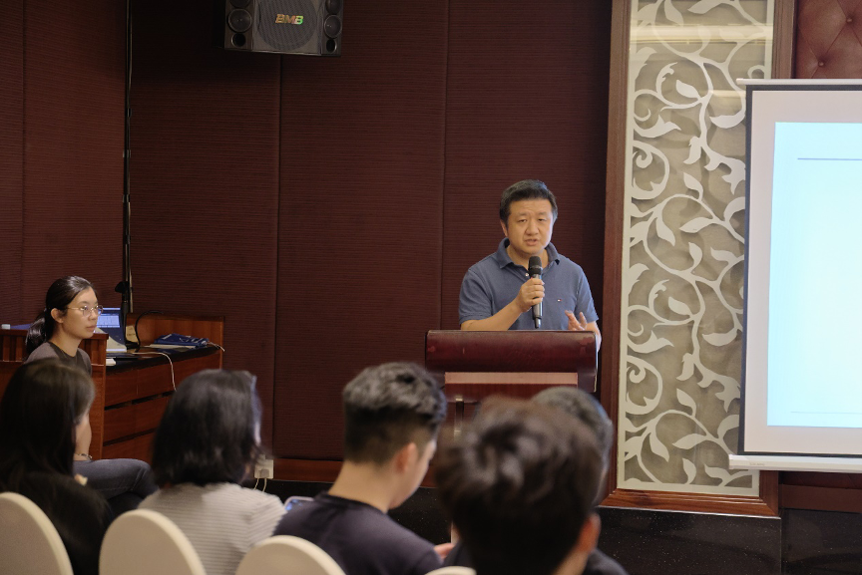
Perspective 2: Huang Zheng (Founding Partner, KeCheng Capital) — The Evolution of the AI Industry and Investment Opportunities: From Technology to Ecosystem
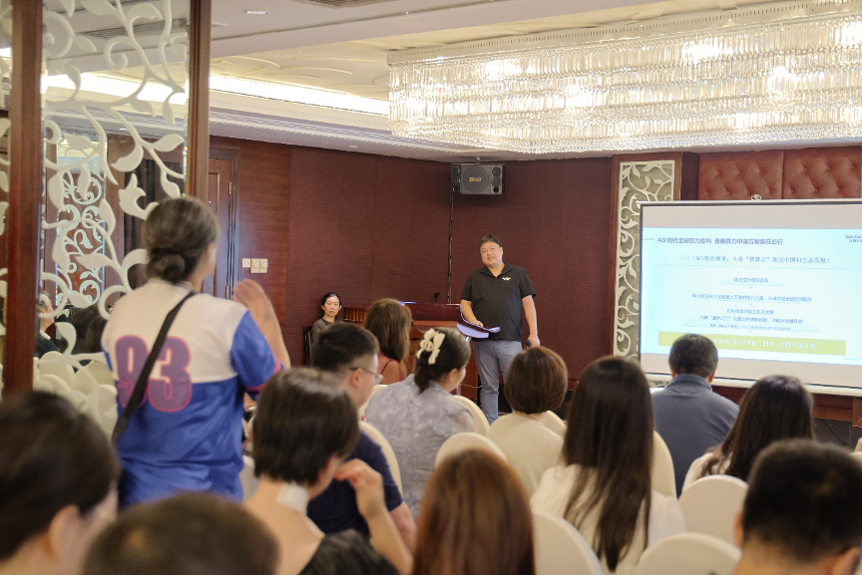
Senior tech investor Huang Zheng outlines the evolution of AI over 80 years from the dual perspectives of industry progression and capital, while dissecting the core dimensions of the current US-China AI competition and identifying key investment opportunities.
1. Four Waves of AI: From "Turing Machine" to "Generative Large Models"
Huang Zheng outlined four key waves in the AI industry along a timeline: The first wave, marked by the Turing Test and the Dartmouth Conference, laid the theoretical foundation for AI. The second wave focused on computer vision and Bayesian networks, enabling AI to solve problems in specific domains. The third wave saw the rise of neural networks and deep learning, paving the way for large models. The current fourth wave centers on generative large models (such as GPT and Kimi), multimodal systems, and embodied AI (e.g., humanoid robots), driving AI from the "virtual world" into the "physical world."
2. U.S.-China AI Competition: It's an "ecosystem showdown," not a "point-by-point contest."
Huang Zheng argues that the core of the US-China AI competition lies not in "the performance of a single model," but in "ecosystem completeness." This can be compared across five dimensions: models, computing power, applications, talent, and capital.
3. Investment Focus: Three Key Sectors to Watch
Combining industry trends with capital logic, Huang Zheng outlined the core investment opportunities in the AI sector today:
- Compute Layer:Domestic GPUs (e.g., Cambricon) and compute operation services (e.g., CloudInn) benefit from the dual demand for "domestic substitution" and "accessible computing."
- Application Layer:AI + Manufacturing (Industrial Vision, Process Optimization), AI + Healthcare (Drug Discovery): China's complete manufacturing supply chain provides a natural foundation for AI deployment.
- Embodied AI:Collaborative robots (e.g., Elite) and industrial-grade smart devices, focusing on "deployable, revenue-generating" mid-stage products that balance innovation with commercialization.
Interactive Highlights: Real questions from live Q&A, grounded expert answers.
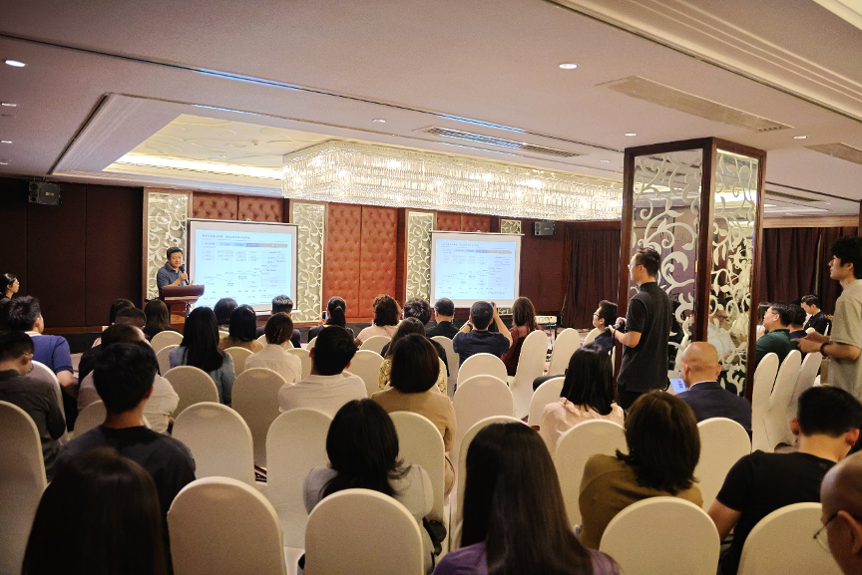
During the forum Q&A session, audience members raised practical questions on topics such as "AI customization for high-end clients," "the relationship between data and computing power," and "low utilization rates of computing centers." The guests' responses were both professional and pragmatic.
Regarding "which is better suited for high-end AI customization: large platforms or small companies," Dr. Fang Lei believes that small companies have the advantage. They specialize in vertical industries and can understand the real needs of CEOs in specific fields—for example, by integrating a consulting firm's industry knowledge into AI models to deliver precise, cost-effective custom solutions.
On the priority of data versus compute, Huang Zheng noted: "Early stages require 'seed data' to get started, but in the long run, compute can generate high-quality data through reinforcement learning—for instance, a robot can simulate a year of training in just one day within a simulator. This is a breakthrough that data alone cannot achieve."
Chang'an Premier Schools Alliance: Building a High-End Platform to Advance the Innovation and Technology Ecosystem
During the event, the host introduced the core value of "Chang'an Elite University Alliance." As a signature initiative under the club, it has hosted numerous high-level academic lectures and alumni entrepreneurship sharing sessions. This AI forum, co-hosted with 20+ elite university alumni associations, exemplifies the club's mission to connect premium resources and empower industrial innovation.
In the future, Chang'an Famous Schools will continue to focus on "new quality productive forces" sectors (AI, new energy, robotics, etc.). Through forums, salons, and closed-door meetings, we will build a platform for cross-industry exchange, resource matching, and win-win cooperation—empowering more enterprises and individuals to seize opportunities of the times.
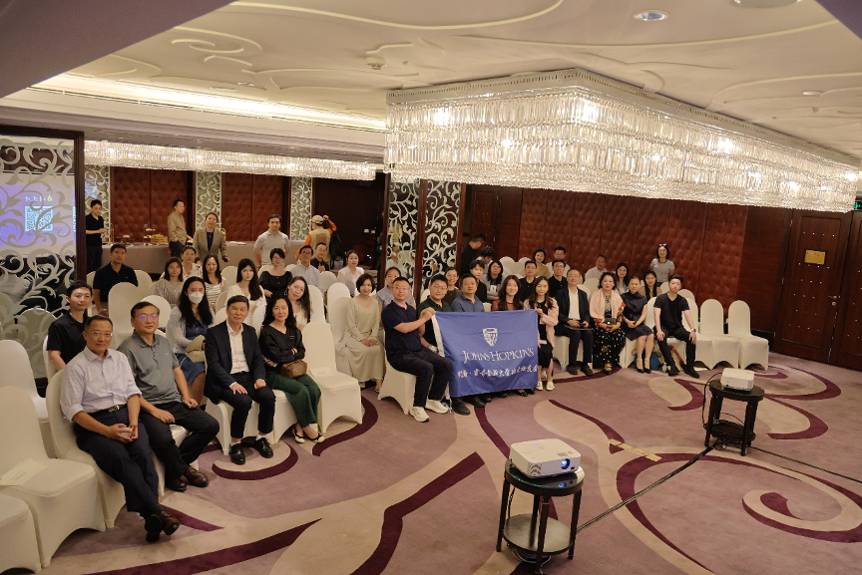
Event Wrap-up: AI is not "future tense," but "present continuous."
As the forum concluded, the audience remained eager for more. From "how to make computing power accessible" to "how AI transforms industries," and from "global competition" to "local opportunities," the speakers' insights not only addressed current industry challenges but also conveyed a core message: AI is not a distant "future technology," but a present force actively reshaping production and daily life.