
Intelligent Computing Economy: Reshaping the Future
Economic Growth Paradigms and Venture Capital Opportunities in the AI Era
On 2025 12, 13, the event "Economic Growth Paradigms and Venture Capital Opportunities in the AI Era – Special Sharing Session on Intelligent Computing Economy and Industry Integration" was successfully held at Chang'an Club. The event was hosted by Johns Hopkins University Beijing Alumni Association and Chang'an Club, with co-organization support from Oxford Cambridge Beijing Alumni Association, University of Hong Kong Beijing Alumni Association, and Hong Kong University of Science and Technology Beijing Alumni Association.
Three industry-leading experts joined forces with top-tier professionals on-site to unpack AI-era opportunities from policy, industry, and investment perspectives, delivering an immersive high-level exchange of ideas.

Key Takeaways from Guest Speakers: From Practice to Trends, Decoding AI's Core Value
Huang Zheng: U.S.-China AI Dual Ecosystems in Parallel; Investment Focuses on Three Key Sectors
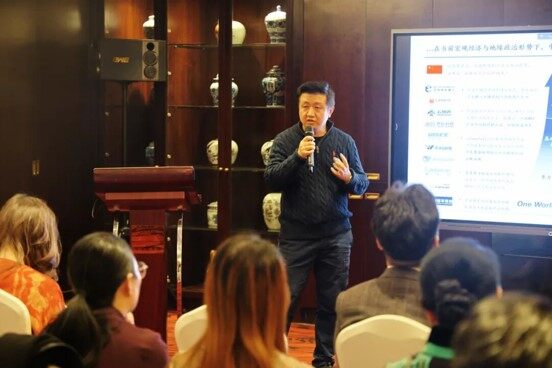
Ke Cheng Capital Founding Partner Huang Zheng analyzes the global AI competition landscape through the lens of "One World, Two AIs": the U.S. leads with advanced chips, closed-source models, and consumer applications, while China breaks through via inclusive computing power, open-source models, and industrial applications (e.g., domestic open-source models like DeepSeek enabling "low-cost, high-efficiency innovation").
From an investment perspective, he proposed the "pyramid principle": the compute layer is benefiting first (e.g., companies like Moore Threads are surging), with a shift toward the algorithm and application layers expected over the next 5-10 years. He emphasized that high-quality Chinese tech assets remain within an investment window. Key sectors for strategic allocation include compute substitution, embodied AI, and industrial applications. Additionally, Hong Kong-listed tech assets stand to gain significantly amid loose liquidity conditions.
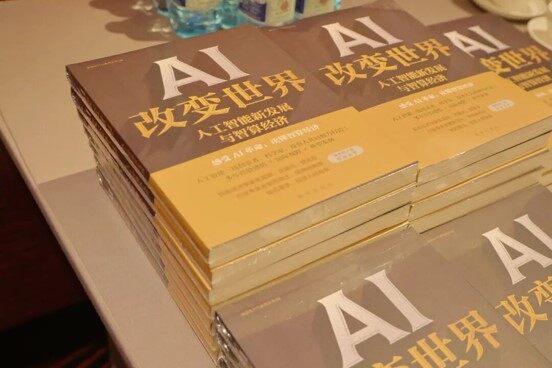
At the end of the session, Huang Zheng also presented his book, "AI Changes the World," to the audience.
Huang Wei: AI's Path from "Assistant" to "Colleague" in Deepening Its Role in the Real Economy
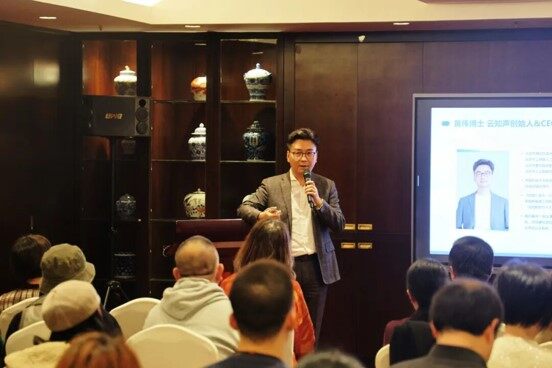
As the founder and CEO of Yunzhi (the first Hong Kong-listed AGI company, 09678.HK), Huang Wei shared practical insights on AI deployment: from his R&D experience at Motorola to building Yunzhi, the core logic is "aligning technical capabilities with scenario needs."
The team's AI-powered medical Shanhai LLM is already deployed at leading hospitals including Peking Union Medical College Hospital and 301, serving over 400 hospitals nationwide (with a nearly 40% coverage of Grade 3A hospitals). Its intelligent policy review solution has improved efficiency by 500x for companies like PICC, while its in-vehicle voice solutions are used by major automakers such as Mercedes-Benz and BYD.
He noted that China's AI advantage lies in its complete industrial chain and vast application scenarios, with an open-source ecosystem enabling rapid iteration of domestic models. In the future, AI will evolve from "assistant" to "colleague" and "mentor." For enterprises, standardizing capabilities and deeply integrating them with specific use cases will be key to breaking through, while exporting models will become a major growth engine.
Guan Qingyou: View the AI Bubble Rationally; Anchor Investments on "Generality + Certainty"
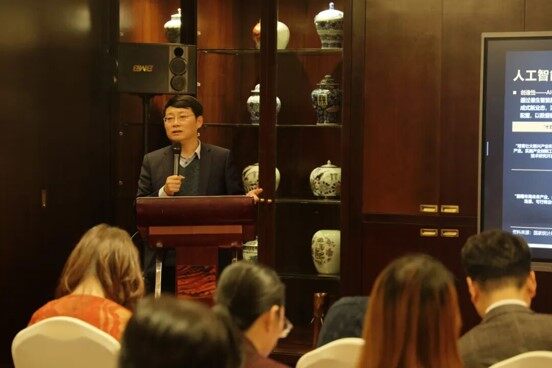
Guan Qingyou, Dean of the Rushi Financial Research Institute, offers a macro perspective: The current "bubble" in AI is a byproduct of industrial prosperity and differs fundamentally from the 2000 internet bubble—the former is supported by solid technological barriers and genuine demand, with funding primarily coming from corporate operating cash flows.
On investment strategy, he recommends focusing on general-purpose foundational technologies and standardized component manufacturers, where long-term value is clear. Meanwhile, upstream AI compute sectors such as power and non-ferrous metals are undergoing a fundamental shift in their investment logic due to exponential demand growth. He also warns: companies must avoid the "oasis in the desert" trap—either evolve into an ecosystem player like a "tropical rainforest," or deeply integrate with industry giants—to sustain growth amid the AI wave.
Engaging Session: Tackling Industry Pain Points and Exploring Practical Directions
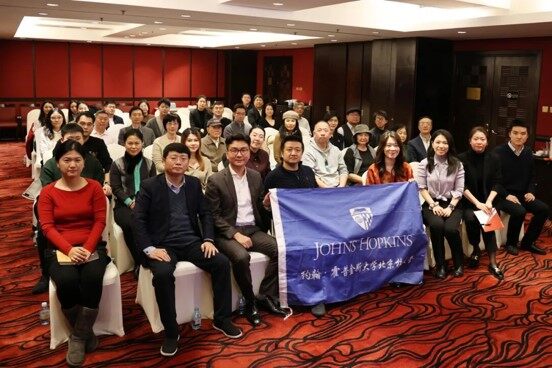
The on-site discussion covered AI education applications, compliance for model global expansion, healthcare AI deployment, and HK stock asset allocation. From "whether US AI applications represent disruption or iteration" to "how models can overcome sovereign data restrictions," from "pathways for healthcare AI to fill the void left by foreign capital exits" to "the proportion of tech assets in HK portfolios," the three guests analyzed each topic with real-world case studies, offering insights that were both practical and forward-looking.
Connecting elite circles to build a high-end AI platform

As a high-end circle platform with over 30 years of history, Chang'an Club's Chang'an Society, in collaboration with the Johns Hopkins University Beijing Alumni Association and alumni associations from multiple world-renowned universities, has created a bridge for cross-industry connections among elite members through this limited-seat sharing event.
In the future, Changan will continue to collaborate with top-tier alumni organizations, focusing on new quality productive forces. We will create more high-value events precisely tailored to members' needs, fostering resource sharing and mutual growth.