
Breaking Through in Trade Wars Amidst Tariff Battles
From Trade War Origins to Corporate Response Strategies
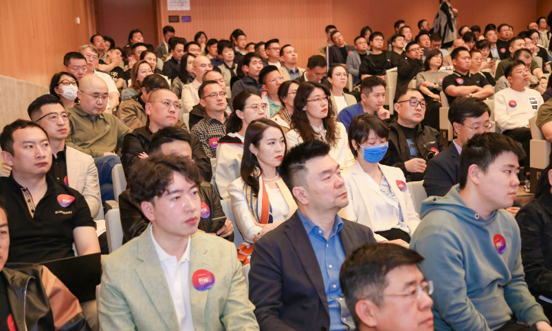
On the evening of 2025/4/25 at 3:00 PM, the CEIBS Beijing campus buzzed with activity as a pivotal event unfolded: "Breaking Through Tariff Wars: From Trade Conflict Origins to Corporate Response Strategies." Hosted by CEIBS and co-organized by the Chang'an Club and Chang'an Society, the gathering brought together numerous members for Professor Huang Sheng's insightful analysis. Amidst today's challenging global trade landscape, attendees explored strategic pathways to navigate commercial challenges and achieve breakthrough success.

In-Depth Analysis of the Trade War
Professor Huang opened with a sharp perspective, deeply analyzing the impact of the trade war on capital markets and the real economy. Regarding the significant drops in China's and Hong Kong's stock markets due to the trade war, he pointed out that this not only reflects the impact of tariffs on Sino-US trade but also reveals the far-reaching consequences of US-China decoupling and global economic instability. The issue of US-China decoupling behind the trade war hangs over the market like the Sword of Damocles, fueling investor anxiety. Furthermore, a series of actions by the US government have exacerbated volatility in the global economy and financial system. With recession expectations looming like dark clouds, China, as an export-oriented economy, naturally cannot remain unaffected.
The ripple effect in the U.S. market
When discussing the United States, Professor Huang emphasized that the trade war has also had a severe impact on the U.S. The U.S. stock market is highly globalized, with publicly listed companies deriving a significant portion of their revenue from overseas operations and maintaining supply chains spread worldwide. For instance, among S&P 500 constituent companies, overseas revenue accounts for 40% of total revenue. Companies like Apple, with their deeply globalized supply chains, have seen their revenues, profits, and cash flows adversely affected by the trade war, leading to a sharp decline in the U.S. stock market.
Moreover, U.S. household wealth is closely tied to the stock market. A sharp decline in equities has severely eroded the wealth effect and dampened consumer spending. Given that the U.S. economy is consumption-driven, this contraction will have a significant negative impact on overall economic growth. In the bond market, trade tensions have driven down Treasury prices and pushed yields higher, prompting investors to sell off U.S. Treasuries and casting doubt on their safe-haven status. The dollar market has also been affected: the dual decline in stocks and bonds has reduced the attractiveness of dollar-denominated assets, leading to a drop in the Dollar Index and creating a rare scenario of simultaneous losses across equities, bonds, and currencies.
Exploring Response Strategies for Chinese Enterprises
In response to the trade war, Chinese enterprises are taking proactive measures while the government acts swiftly. Professor Huang notes that China's policy toolkit is robust, with fiscal and monetary policies working in tandem. Following the Central Economic Work Conference, a series of decisive actions have been implemented: coordinated efforts to stabilize the stock market, state-backed funds increasing their holdings in ETFs, listed companies actively repurchasing shares under policy guidance, and banks providing financial support to businesses. These measures aim to stabilize the capital market and restore investor confidence, as a stable capital market serves as a cornerstone for sustainable economic growth.
Global Expansion Strategy Direction
- Enhance Global Competence:Achieve global operations by diversifying market selection to avoid overreliance on a single market.
- Flexible Global Expansion Models:Adapt strategies to local conditions by flexibly selecting approaches such as overseas manufacturing, localized operations, joint ventures, technology licensing, or asset and equity swaps based on industry, enterprise, and market specifics.
- Multi-mode combination:Many enterprises adopt a multi-mode combination strategy in practice, with BYD as a prime example. It flexibly switches between trade, joint ventures, and direct manufacturing across different development stages.
Globalization: Underlying Logic and Future Outlook
During the event, Professor Huang also provided an in-depth analysis of the underlying logic of globalization. He noted that globalization stems from Adam Smith's theory of division of labor and collaboration, where countries engage in international specialization based on their resource endowments to leverage comparative advantages and maximize value. However, as development progressed, the global value chain became rigid and fragmented, leading to global imbalances. The U.S. has long occupied the high-value segment of the chain, relying heavily on consumption and imports while experiencing a decline in manufacturing. Meanwhile, countries like China have strived to move up the value chain, triggering a series of economic and political shifts.
Looking ahead, Professor Huang expressed strong confidence in Chinese companies going global. He encouraged them to strengthen original innovation and enhance product technology levels, focusing on iterative improvements while increasing investment in basic research to achieve breakthroughs from 0 to 1. He also emphasized the importance of cultural globalization, noting that Chinese enterprises can not only gain economic benefits but also promote Chinese culture and boost national soft power during their global expansion. If Chinese companies embrace ESG principles locally and become responsible corporate citizens, they will significantly improve China's international image.
Highlights from the Q&A Session
- Representative of a traditional small manufacturing enterprise:How can we overcome challenges related to tariffs and market transition?
Prof. Huang suggests expanding into non-US markets to diversify risk. - Media Personnel:How to export Chinese culture?
Professor Huang suggests adopting a more artistic commercial packaging approach. - Head of an Appliance Motor Enterprise:How to select overseas markets?
Professor Huang Sheng analyzes: Mexico has advantages in location and trade agreements.
This timely event cut through the fog of a complex trade landscape. Participants left with valuable insights, a deeper understanding of trade dynamics, and clearer direction for their companies' future growth. We look forward to hosting more such events to help businesses navigate global trends and achieve sustainable development.
Explore more events