
A Thousand Years of Lacquer, the Inked Rhyme of Chang'an
Wujin Cangyin · Eastern Aesthetic Philosophy Salon
Nestled along Chang'an Avenue, a courtyard embodies the essence of Eastern elegance. With lacquer as its bone and ink wash painting as its soul, this millennium-spanning aesthetic gathering concluded successfully at the Chang'an Club.
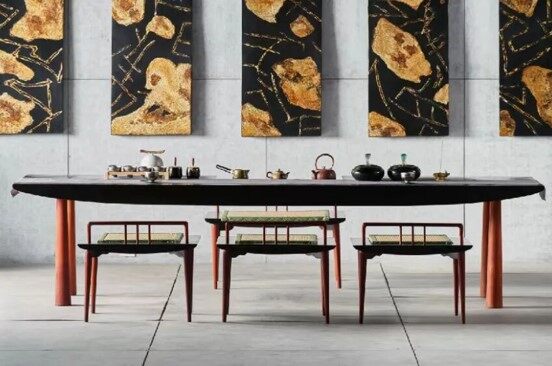
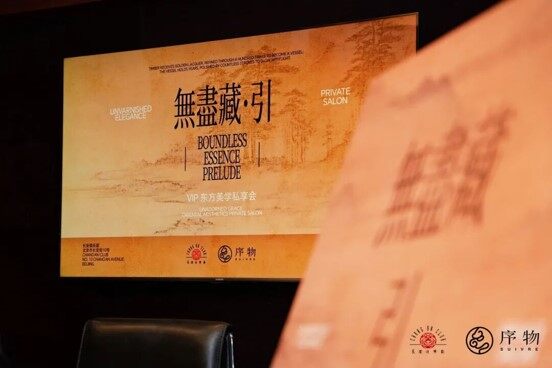
Recently, Chang'an Club partnered with the lacquer art home brand Xuwu to launch "Infinite Treasury: A Dialogue on Eastern Aesthetics." Distinguished guests gathered to explore the millennium-old craftsmanship of intangible cultural heritage lacquer art and witness contemporary ink painting's free expression. Through this conversation between lacquer and ink, past and present, attendees immersed themselves in the beauty of Eastern living aesthetics.
The Gathering Opens | The Sky and Earth Have Limits; Lacquer Is Infinite
Hosted by Qu Ge, founder of the brand Xuwu, the event opened with an immersive Eastern atmosphere.
The universe is finite, but lacquer is infinite. Wood awaits the metal's touch, transformed through countless changes into vessels; these vessels hold the passage of time, radiating brilliance across eternity.
Qu Ge expressed sincere gratitude to all guests on behalf of Xiwu and shared the brand's founding vision: Born in Fuzhou, China's "Capital of Lacquerware," Xiwu is committed to preserving the millennium-old lacquer craftsmanship and redefining contemporary Eastern living. We view lacquer as a living culture and art shaped by time. This event goes beyond showcasing lacquer art furniture; it features two special cultural sharing sessions that explore the Eastern spirit behind lacquer and ink painting through the dual perspectives of artisans and artists.
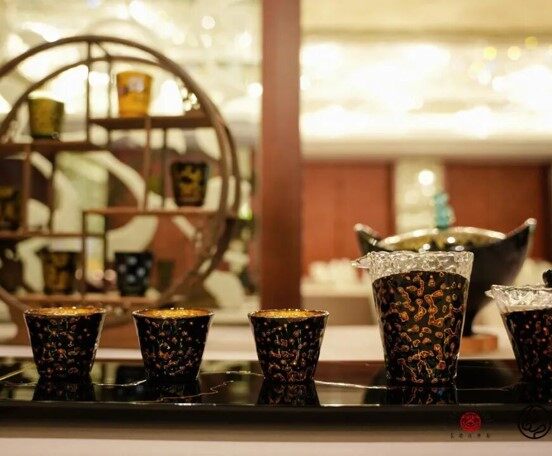
The main hall and the 8th-floor exhibition area are fully curated with an extensive collection of lacquerware. Highlights include: a double-sided narrative screen depicting four seasons in lacquer, a Red Dot Award-winning carbon fiber tea table adorned with blooming flowers, a "Embrace Moon" armchair designed with ergonomic principles, and a Song Huizong-style lacquer tea tray co-created by nine artists. The natural lacquer boasts a warm luster and distinct handcrafted textures, allowing guests to intimately connect with eight millennia of lacquer art heritage. A refined black tea break awaits, inviting attendees to admire the pieces, engage in elegant conversation, and savor the beauty of craftsmanship within the sophisticated space of the Chang'an Club.
Tracing the Origins of Lacquer Art: Intangible Cultural Heritage Craftsman Huang Baoxian Reveals the Eastern Code of 8,000-Year-Old Lacquer
Featured speaker: Huang Baoxian, a master craftsman and inheritor of the Fujian Province's sixth batch of lacquerware decoration intangible cultural heritage. With nearly 50 years of dedicated work in lacquer art, he serves as a visiting professor at multiple art institutions across Taiwan Strait and as a resident artist at Taiyi Co., Ltd. in Japan. He brings decades of experience in cross-cultural lacquer art creation and academic research.
Teacher Huang Baoxian addresses common misconceptions about lacquerware, clarifying the distinction between natural tree lacquer and chemical coatings. Authentic lacquer is derived from the sap of the lacquer tree; it is recorded in the *Compendium of Materia Medica* as a medicinal substance, offering resistance to acids and alkalis, protection against insects and decay, and exceptional durability. Artifacts such as the crimson-lacquered wooden bowl from Hemudu and the lacquered bow from Kuahuqiao confirm that Chinese lacquer art boasts a history spanning 8000 to 9000 years.
- Premium Ingredients:Lacquer trees are categorized into wild, large-scale trees and cultivated, small-scale ones. It takes thousands of trees to produce just one pound of raw lacquer. With a long harvesting cycle, this natural ingredient is extremely precious.
- Royal Exclusive:In ancient times, lacquerware was reserved exclusively for the imperial court. During the early Ming Dynasty, strict regulations prohibited its use by commoners; crimson pigments, gold gilding, and carved patterns were permitted only for royalty and nobility. Emperor Wu of Han established the Office of Artisans, Emperor Chengzu founded the Guoyuan Workshop, and Emperor Qianlong had a particular fondness for Tibetan-style lacquer. The golden dragon throne in the Hall of Supreme Harmony at the Forbidden City stands as the pinnacle of this exquisite craft.
- Global Impact:Tang Dynasty lacquerware was transmitted to Japan via the Kentoshi envoys, giving rise to the maki-e technique. During the Ming and Qing dynasties, China's Maritime Silk Road exported lacquerware to Europe, where it earned the Western acclaim of "black gold." The royal houses of France, Britain, and Austria competed to collect these pieces, even dismantling Chinese screens to mount them as wall decorations.
- Contemporary Innovation:Contemporary Chinese lacquer art is thriving. Universities offer dedicated programs, and master artisans continue to innovate. Techniques such as lightweight lacquerware, carved lacquer, mother-of-pearl inlay, eggshell application, and decorative coating variations are flourishing. Xuwu revitalizes this intangible cultural heritage through modern design, creating everyday lacquer furniture that seamlessly fits into daily life.
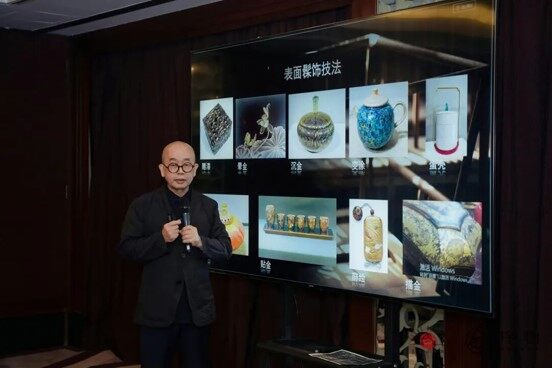
Teacher Huang proposed the creative philosophy that "everything can be lacquered." Glass, ceramics, bamboo, wood, and carbon fiber can all be finished with lacquer, though each substrate requires specific preparation techniques. He also compared lacquer art across China, Japan, Korea, and Vietnam: China offers the highest-quality raw lacquer and the widest variety of products; Japan excels in refining technology but relies on imported materials; Vietnam's lacquer is softer and suitable only for basic wiping applications. Throughout the session, Teacher Huang drew upon historical texts, archaeological artifacts, and global museum collections to help attendees understand why Chinese lacquer is a premium Eastern luxury unique to China.
Ink Reborn: Artist Zhou Xiongbo Writes the Free Spirit of the East with Tea Lacquer
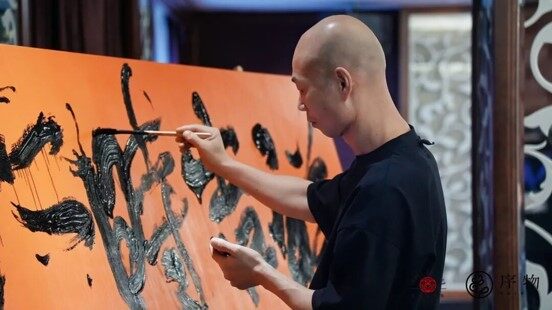
The lacquer art showcase concludes with a live improvisational calligraphy performance by contemporary ink artist Zhou Xiongbo, where stillness and motion harmonize perfectly with the millennial tradition of true lacquer.
Zhou Xiongbo, originally from Hui'an, Fujian, began his artistic journey with oil painting before transitioning to contemporary abstract ink. He created the iconic IP "Xi Huan Jiu Hao," drawing inspiration from Tadao Ando's Eastern minimalist aesthetics. His work integrates the dappled light of casuarina trees and the landscapes of his hometown into expressive brushstrokes. Breaking away from traditional calligraphy forms, Zhou favors monumental wall-sized compositions that transform tea scrolls into immersive spatial experiences. As viewers walk among the works, the fluid ink moves freely like mountain streams or forest shadows, brimming with natural vitality.
In the sharing session, Zhou Xiongbo presented his exclusive creative system, "Left Tea, Right Lacquer," integrating Fujian's tea culture with traditional lacquer craftsmanship into ink painting. Using aged tea liquid, natural lacquer, gold leaf, and silver leaf as mediums, he inscribed the Heart Sutra on rice paper, corrugated paper, and bamboo tea scoops. As the lacquer meets water, it naturally spreads; rather than striving for perfect calligraphy, he allows the inherent texture of the materials to emerge organically. He can write micro-calligraphy as small as 3 mm by hand and once spent three years crafting a 1.5-meter-diameter cire perdue lacquer vessel, applying layers of lacquer and polishing repeatedly to infuse the temporal essence of lacquer into his ink art.
From emulating Master Hong Yi to integrating local cultural elements such as the You Shen Bench Dragon, Wuyi Mountain Cliff Dwellings, and the ancient Sishui Cauldron Retrieval, his work transcends the boundaries of calligraphy, painting, ceramics, and installation. Collaborating with top-tier luxury brands, his pieces have been showcased in premium spaces across Shanghai, Xiamen, and Fuzhou, including displays at Lanqilou and the Caode Wang Hotel. Through live, spontaneous brushwork where ink splashes and voids merge with form, guests witness the contemporary rebirth of traditional Chinese ink art and experience an uninhibited Eastern spirit of freedom.
Echoes of the Gathering: Lacquer and Ink in Harmony, Embodying the Endless East
One coat of lacquer preserves time; one stroke of ink reveals the mountains and rivers.
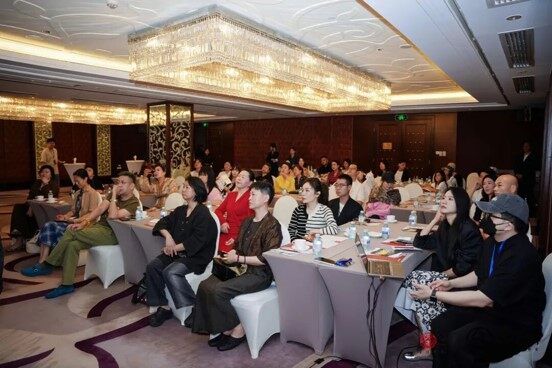
With fifty years of craftsmanship, Master Huang Baoxian traces the eight-thousand-year civilization of lacquer; Zhou Xiongbo uses tea-lacquer as his brush to reimagine ink wash for contemporary expression. One red, one black; one still, one dynamic—traditional intangible cultural heritage meets modern artistic creation here, fully embodying Xuwu's brand core: "Heaven and Earth in Order, All Things Beautiful."
As the event draws to a close, guests will move to the 8th-floor exhibition area and the lobby gallery to experience the complete line of handcrafted lacquerware furniture up close and engage in an in-depth conversation with the two artists about their creative process. The brand founder will also introduce Beijing 798 Xuwu Lacquer Art Space, inviting all members to visit for an immersive experience of the full beauty of lacquer artistry.
The Chang'an Club is dedicated to building a premium cultural exchange platform, continuously exploring the diverse possibilities of Eastern aesthetics, intangible cultural heritage, and contemporary lifestyles. We create exclusive cultural salons for our members that blend depth with sophistication.
The "Endless Treasures: Eastern Aesthetics Forum" has concluded, yet the beauty of Eastern artifacts and the elegance of brushwork remain here. For more exclusive events in art, aesthetics, and culture, please stay tuned to the Chang'an Club's official updates for further refined Eastern experiences.
Explore more events