
Chang'an Intangible Cultural Heritage: Master Class on Peking Opera Headdresses and Colorful Sculpture Masks
When Peking Opera Headdress Meets Colored Sculpture Face Paint: A Millennial Dialogue of Intangible Cultural Heritage
July's heat couldn't stop a heartfelt reunion with tradition. From the flowing water sleeves of Peking Opera to the craftsmanship flowing through fingertips, from the dedication stories of master artisans to innovative insights from cross-disciplinary collaboration, this intangible cultural heritage celebration themed "Peking Opera Helmets and Colorful Masks" allowed every participant to feel the warmth and strength of traditional culture.
Captivated by the soul of Peking Opera from the very start.
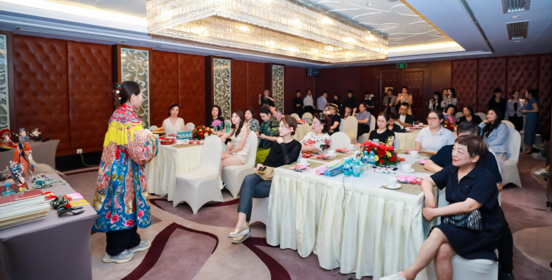
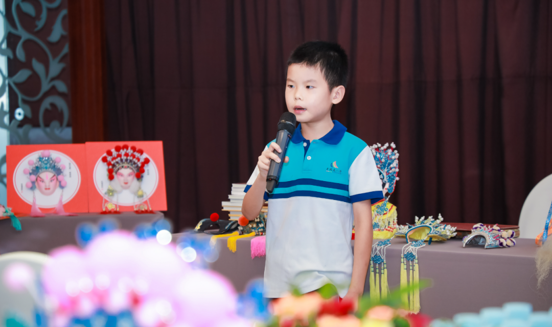
The event kicked off with two Peking Opera performances spanning generations, igniting the crowd's enthusiasm. Ms. Wang Jiaqian, a seasoned veteran of the opera stage, performed an excerpt from "The Drunken Concubine." With her graceful sleeve movements and expressive eyes, she captured the elegance and spirit of the dan role, embodying the charm of the Tang Dynasty. 8-year-old young fan Zhu Xianze (nicknamed "Xiao Shu") then stunned the audience with an excerpt from "Taking Tiger Mountain by Strategy." His youthful voice carried the maturity of the lao sheng role, and his passionate rendition of "Crossing the forest, traversing the snowfields" drew applause from all—a true testament to the legacy of Peking Opera, thriving through the interplay of grace and strength.
From headdresses to face paintings: Decoding the history and evolution of this intangible cultural heritage
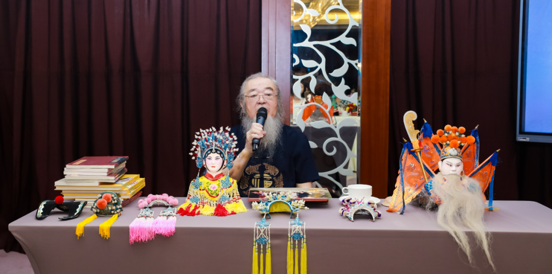
As applause faded, the event's featured guest—Master Yang Yudong, founder of "Face-Painting Yang" and a Beijing-level intangible cultural heritage inheritor—slowly took the stage. With over 60 years of dedication to Peking Opera heritage, this seasoned artisan unveiled the mysteries of Peking Opera headdresses and colorful face masks in simple, down-to-earth language.
"Notice the fine raised powder work on this helmet," Master Yang said, lifting a sample and tracing the intricate patterns with his fingertip. "The lines are thinner than a pencil lead—you have to outline them delicately, just like piping cake frosting." He continued, "In the past, crafting helmets for emperors and generals required over 17 steps, from bamboo frame construction and gauze shaping to gilding and painting. Each piece often took months to complete." From his early days in filigree and inlay craftsmanship, through the years he was forced into other work yet never lost his original passion, to sharing Chinese culture by visiting over 20 countries with his art, and even presenting figures like Zhong Kui and Sun Wukong as state gifts to foreign dignitaries—Master Yang's story reveals not only the brilliance of the craft but also the deep confidence of our culture.
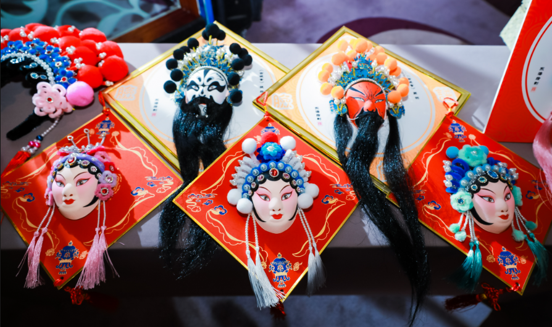
When it comes to painted clay masks, Master Yang couldn't stop talking. "Traditionally, these masks were only for 'Jing' roles," he said. "But I wanted to bring life to Sheng, Dan, Jing, and Chou alike." He pioneered a three-dimensional technique that integrates headgear with facial designs, capturing Guan Yu's loyalty, Mu Guiying's valor, and Cao Cao's cunning in clay and color. The exclusive mask albums displayed on-site left everyone in awe of the craftsmanship—patterns clipped from Republican-era newspapers painstakingly compiled and replicated by him over several years, now serving as invaluable resources that fill a critical gap in the industry.
Tradition and Innovation: A Dynamic Conversation on Heritage
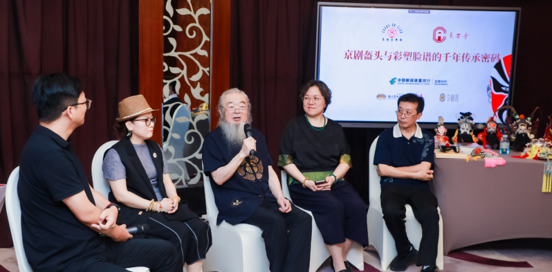
Preserving intangible cultural heritage goes far beyond replicating techniques. In the subsequent "Integrity and Innovation" forum, Master Yang Yudong engaged in a compelling dialogue with his son and fellow inheritor Yang Donghai, Qu Lina (an inheritor of traditional opera makeup and styling), and Wu Danmin, a dedicated innovator in ethnic craftsmanship.
"My father often said, 'To master intangible cultural heritage (ICH), you must first understand authenticity,' shared Yang Donghai. Having learned the craft from his father since childhood, he now integrates modern technology into teaching—using 3D printing to streamline helmet production, allowing elementary students to experience the joy of ICH firsthand. Qu Lina offered a different perspective from her expertise in traditional opera makeup: 'Tradition isn't rigid. Just like applying hairpieces in Peking Opera, placement varies by face shape; what truly matters is that no two faces are alike.' Wu Danmin recalled a cross-cultural collaboration with Master Yang: 'When French children painted their clowns using Peking Opera masks, I suddenly realized—ICH serves as a bridge, enabling diverse cultures to find common ground.'"
Master Yang's remark left everyone in the room reflecting: "The soul of Peking opera lies in its ability to draw from diverse traditions. It took nearly two centuries, from the Hui troupes' arrival in Beijing to the formation of Peking opera itself, to develop its distinctive style and rhythm. Today's innovation must also be gradual; only by preserving our roots can we move forward with purpose."
Intangible cultural heritage at your fingertips: touch the millennial craftsmanship with your own hands.
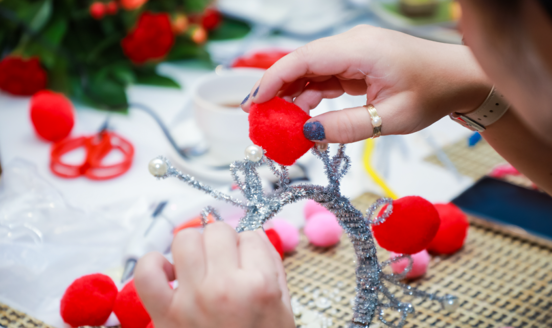
After the forum concluded, the hands-on workshop became the highlight of the event. Guided by masters Yang Yudong and Yang Donghai, participants picked up yarn strips and glue guns to craft helmet-inspired headpieces. "Tighten the wrapping to avoid gaps," and "position the pom-poms symmetrically for a balanced look." With step-by-step instruction from the masters, what once seemed like a complex craft became easily achievable.
Someone remarked, "I never realized so much care goes into a single strip of fur or a few strands of thread." Other parents even worked alongside their children to create these pieces together: "Letting kids do it themselves is far more effective than telling them ten stories." When each thoughtfully crafted "mini headdress" was finished, everyone seemed to finally understand the saying, "Better to wear something worn than worn incorrectly." The true value of intangible cultural heritage lies in this reverence for detail.
Unexpected delight, honoring the power of perseverance
A heartwarming interlude moved the entire audience. Staff suddenly brought out a birthday cake—it was Master Yang Yudong's 83th birthday. As the "Happy Birthday" song rang out, this master craftsman, who often spoke of his craft with tears in his eyes, broke into a childlike smile. "All I've done in my life is one thing: pass on the beauty of Peking Opera." The wish he made echoed the hearts of everyone present.
From morning京剧 makeup and costume experiences to afternoon lectures, forums, and hands-on workshops, this all-day celebration of intangible cultural heritage brought two municipal-level heritage skills—"Jingju headdress crafting" and "colorful Jinghu facial mask sculpture"—from books and stages into everyday life. As Master Yang said: "Intangible cultural heritage isn't a museum specimen; it's living memory."
The Chang'an Intangible Cultural Heritage Fair is dedicated to fostering dialogue between tradition and the contemporary. We look forward to meeting you again at our next event, where we will innovate through dedication and keep the flame of culture alive.
Explore more events