
Master Zhang Tiecheng's Imperial Jade Carving Lecture: Passing the Torch of Excellence
Unlock the Secrets of Imperial Jade Carving with a Master Artisan from China
In the golden autumn of September, a gentle breeze carries elegance. On 9 month 24, at Taihe Hall on the 9 floor of Chang'an Club, with rising tea fragrances and flowing jade melodies, the "Imperial Jade Inheriting the Legacy" Chang'an Intangible Cultural Heritage Event [Master Lecture] concluded successfully. Mr. Zhang Tiecheng, a National Master of Arts and Crafts and Beijing Jade Carving Intangible Cultural Heritage Representative Inheritor, visited the event. Bringing decades of jade carving craftsmanship and profound cultural heritage, he guided club members and cultural enthusiasts on an immersive journey exploring Chinese jade culture.
Unveiling a Thousand Years: From the Legacy of Ritual Jade to the Master Craftsmanship of a Great Nation
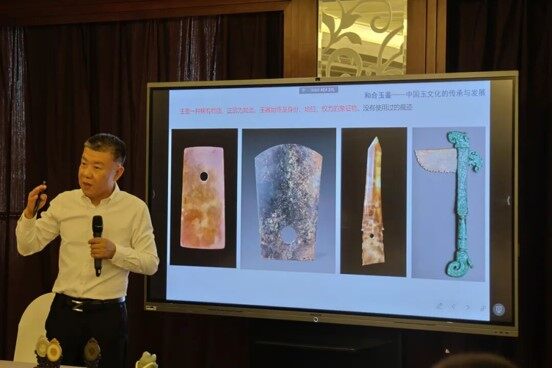
At the start of the event, Master Zhang Tiecheng opened with the theme "Jade is the Soul of China," unfolding a 10,000-year history of jade culture. From the 9000-year-old jade earrings discovered at the Xiaonanshan site in Heilongjiang to the jade bi and cong discs from the Liangzhu culture that connected heaven and earth; from the Han Dynasty "Queen's Seal" as a symbol of power to the Qing Dynasty's "Twenty-Five Imperial Seals" representing state rituals, Master Zhang brought these vivid historical examples to life, helping the audience understand the sacred role of jade in the ancient principle: "The greatest affairs of the nation are sacrifice and war."
When discussing the inheritance of contemporary jade culture, the master shared stories behind several national projects: The "Three Autumns Vase," a 1959 tribute for the tenth anniversary of the founding of the People's Republic of China, used jade to pray for favorable weather and harvest; the 2008 Beijing Olympic Emblem Treasure drew inspiration from the Qing Dynasty's "Twenty-Five Treasures," specifically the "Treasure of Heaven's Mandate." Standing 13 cm tall, it symbolizes the unity of 13 billion people in supporting the Olympics, while its 112 mm side length honors the 112-year history of the Games. It also pioneered the mass production of 2008 collectible editions, breaking the tradition of jade carving as unique pieces only. In 2022, the Winter Olympics Emblem Treasure took the form of a phoenix, echoing the dragon design of the Summer Olympics treasure, creating a legendary tale of "dragons and phoenixes bringing prosperity" across two Olympic Games.

Nothing moved the audience more than the development journey of the "Jin Xiang Yu" Olympic medals. To overcome the technical challenge that jade is fragile, the master team broke over 300 jade rings before successfully solving the impact resistance issue with an innovative 1 mm silicone ring design. When explaining the clever color gradient—"white jade for gold medals, white-green jade for silver, and green jade for bronze"—and the cultural symbolism behind "a match made in heaven," which reflects the Confucian ideal that "gentlemen compare their virtue to jade," the room filled with applause. This achievement represents not only a breakthrough in craftsmanship but also China's confident expression of its culture to the world.
One Glimpse, True Taste: Get Close to Rare Treasures and Connect with the Essence of Jade Carving
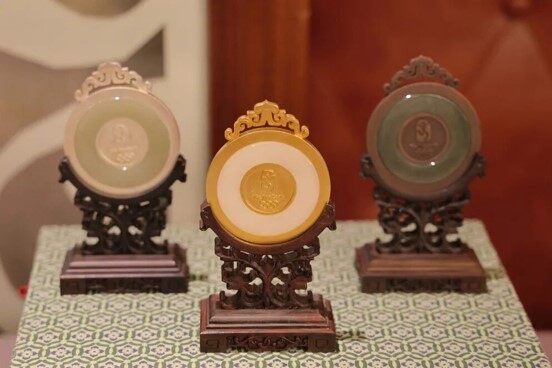
Following the tea break, the event moved to the "Fine Art Appreciation" session. Master Zhang Tiesheng personally presented rare exhibits, including a replica of the Olympic Emblem Collection Edition, samples of the "Gold-Inlaid Jade" medals, and documentation of the Forbidden City's "Twenty-Five Imperial Seals." He provided detailed explanations on the creative concepts and craftsmanship challenges behind each piece.
In front of the replica Olympic Emblem Treasure, the master meticulously explained the rigorous standards behind 15:1 yield rate—only 500 kilograms of jade can produce 3 emblem treasures, and creative reuse of offcuts pioneered industrialization in jade carving. Holding up a "Gold-Inlaid Jade" medal sample, he pointed to the pattern on the hanging loop: "This evolved from the traditional double-dragon pu-patterned huang; every line is hand-polished. Achieving perfect uniformity across 6000 medals relies entirely on the craftsman's patience and dedication."

Members who brought jade artifacts on-site walked away with valuable insights. Master Zhang Tiesheng drew upon his experience restoring jade pieces from the Qianlong Garden in the Forbidden City, offering personalized guidance on material identification and design optimization for each artifact. From traditional techniques of "crafting according to the material" to modern suggestions blending contemporary aesthetics with classic patterns, his professional yet accessible explanations left many members saying they finally had a clear breakthrough.
One Word, Endless Legacy: Keeping Intangible Cultural Heritage Alive Today and Shaping Its Future
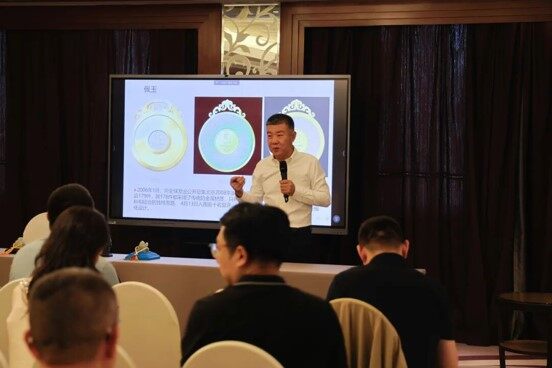
At the close of the event, Master Zhang Tiecheng shared his unforgettable experience restoring cultural relics in the Qianlong Garden of the Forbidden City. Over ten years, he led a team to replace missing jade ornaments using "the mindset of ancient artisans" and dyed ox bone to restore traditional techniques, bringing back the imperial jade elegance from a century ago. "Jade carving is not just craftsmanship; it is the continuation of our cultural heritage." These words capture the core of intangible cultural heritage preservation.
From the Olympic Seal to the Winter Olympics medals, from state gift designs to cultural relic restoration, Master Zhang Tiecheng's nearly 40 years of dedication prove that traditional jade carving has never gone out of style. It can harmonize with Olympic spirit in the new era, convey cultural warmth through high-level diplomacy, and bring beauty into everyday life.
Although the Chang'an Intangible Cultural Heritage Fair – Master Lecture Series has concluded, the allure of jade culture and the legacy of craftsmanship continue to thrive. Moving forward, Chang'an Club will deepen its commitment to intangible cultural heritage, creating more opportunities for members to engage with masters and connect with traditional culture, breathing new life into millennia-old traditions in modern living.
Explore more events